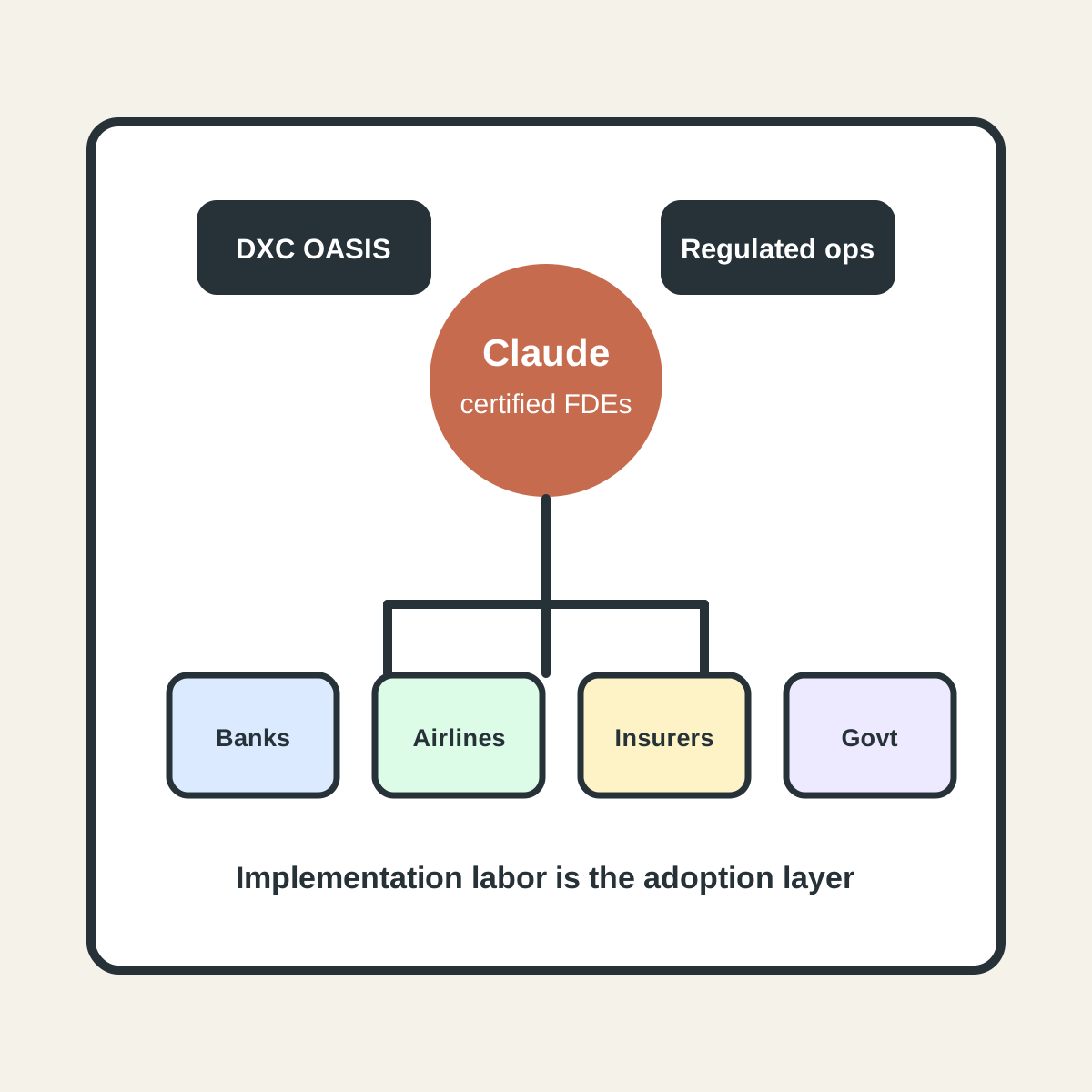
Anthropic announced a multi-year global alliance with DXC Technology on June 11, 2026. DXC will train tens of thousands of Claude-certified forward-deployed engineers to bring Claude into systems used by banks, airlines, insurers, manufacturers, and government agencies.
This is an implementation story more than a model story. Anthropic is pairing Claude with a services company that already operates regulated enterprise systems, where adoption depends on compliance, legacy modernization, security reviews, and people embedded close to the customer.
The services layer is the product path
Anthropic says DXC will bring Claude into systems it already operates for large, regulated customers. That is the core of the announcement. These are not greenfield chatbot deployments. They are systems that handle transactions, claims, operations, and application maintenance under strict controls.
DXC joining the Claude Partner Network gives Anthropic a way into those environments through embedded engineers rather than only through direct product access. The forward-deployed engineer model is labor-intensive, but that is the point: regulated companies need help mapping AI to existing processes, not just access to a model endpoint.
DXC tested Claude inside its own platform first
Anthropic says DXC used Claude inside its own operations before rolling it out to clients. The clearest example is DXC OASIS, an AI-native orchestration platform for managed services.
According to Anthropic, DXC says Claude sped up software development by a factor of 10 and generated more than 95% of OASIS code before human engineering review. OASIS now serves more than 50 DXC customers.
Those are company-provided figures, not independent performance results. Still, they explain why Anthropic is highlighting DXC: the partner can claim it used Claude under similar operational constraints before selling the pattern to customers.
The first four work areas are practical
Anthropic lists four initial areas for the alliance: insurance, modernization as a service, cybersecurity, and application services.
That list is narrower and more useful than a generic enterprise-AI promise. Insurance depends on core systems and context-heavy processes. Modernization involves old codebases where agents can help analyze, refactor, and test. Cybersecurity needs always-on triage and investigation work. Application services are close to the maintenance workflows DXC already operates.
The work is likely to be uneven. Some legacy systems are poorly documented, deeply customized, or too sensitive for broad automation. But the announcement’s center of gravity is credible: Claude is being positioned as a tool inside managed service workflows, not as a replacement for enterprise architecture.
What to watch next
The first checkpoint is whether DXC publishes customer outcomes beyond platform adoption. Useful evidence would include modernization cycle time, incident-resolution metrics, defect rates, audit findings, or customer retention after Claude-assisted workflows go live.
The second checkpoint is certification quality. Training tens of thousands of engineers sounds large, but the value depends on what certification requires and whether engineers can safely apply Claude inside real customer constraints.
The third checkpoint is whether Anthropic’s partner strategy becomes a repeatable distribution engine. The company already expanded its partner network this month. DXC gives that strategy a regulated-industry lane with a large services footprint and a specific implementation model.
For broader model context, see our AI model leaderboard. For related company coverage, see Anthropic.