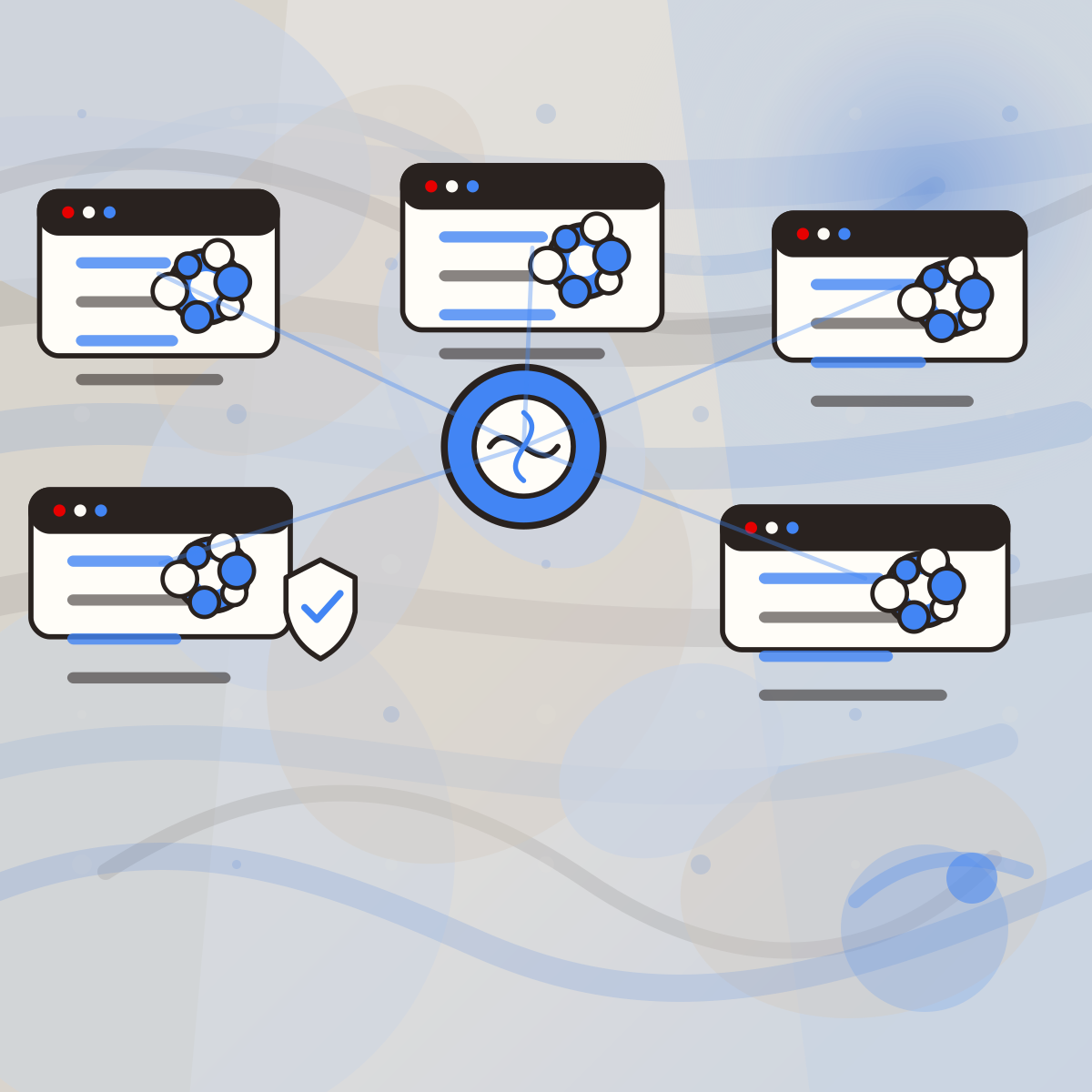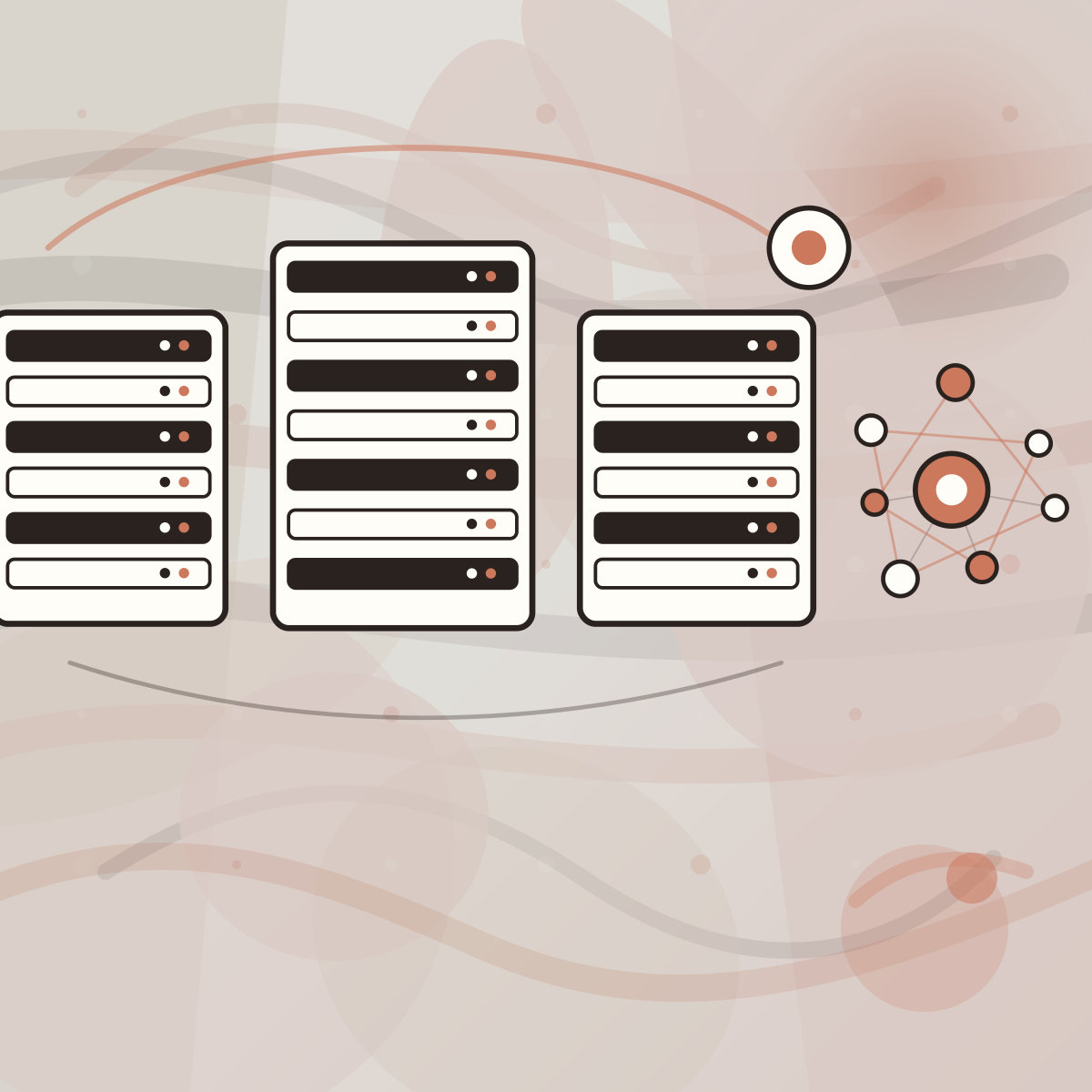
Editorial illustration of AI compute capacity linking data-center racks to higher product limits
+ Anthropic News

Anthropic's SpaceX compute deal turns capacity into a product feature

Anthropic's May 6 SpaceX agreement adds Colossus 1 capacity and immediately raises Claude Code and Claude API limits, linking infrastructure directly to user experience.

Anthropic announced on May 6, 2026 that it had agreed to a compute partnership with SpaceX and was raising usage limits for Claude. The unusual part is how directly the infrastructure deal is tied to the product experience.

Anthropic says it signed an agreement to use all of the compute capacity at SpaceX’s Colossus 1 data center, giving it access to more than 300 megawatts of new capacity and over 220,000 NVIDIA GPUs within the month.

What changed

Anthropic says Claude Code five-hour rate limits are doubling for Pro, Max, Team, and seat-based Enterprise plans. It is also removing peak-hours limit reductions for Claude Code on Pro and Max accounts, and raising API rate limits for Claude Opus models.

The company lists the SpaceX agreement alongside other compute commitments: up to 5 GW with Amazon, 5 GW with Google and Broadcom, a Microsoft/NVIDIA Azure capacity partnership, and a $50 billion U.S. infrastructure investment with Fluidstack.

Why this matters

For users, model quality is only half the product. Rate limits, peak-hour throttling, latency, and availability shape whether an AI tool can be trusted for real work.

Anthropic is effectively saying compute capacity is now a feature. If the company wants Claude Code and Claude API workloads to become daily infrastructure, it needs enough hardware to make high-intensity use feel normal rather than scarce.

What to watch next

Watch whether higher limits stay durable during demand spikes. Also watch whether compute concentration creates dependency risk. The AI model race increasingly looks like a power, data-center, and supply-chain race.

Sources

The AI Feed Desk

The AI Feed Desk

Editorial desk

The AI Feed Desk tracks AI provider updates, model releases, agent tooling, and enterprise adoption, turning fast-moving announcements into source-linked context for builders and operators.

Noticed a typo, incorrect information, or translation error?

Tell us so we can fix it.

Help Improve This Article

Related Articles

Anthropic's Stainless acquisition brings Claude closer to the API layer

Anthropic's May 18 acquisition of Stainless gives Claude Platform deeper control over SDKs, CLIs, and MCP server tooling, showing how agent competition is moving into API connectivity.

The AI Feed Desk

By The AI Feed Desk

Google I/O 2026 makes Gemini the operating layer for agents

Google's May 19 I/O updates put Gemini 3.5 Flash, Gemini Spark, Android automation, and Universal Cart into one agent strategy across apps, devices, developer tools, and commerce.

The AI Feed Desk

By The AI Feed Desk

OpenAI says its model disproved an 80-year geometry conjecture

OpenAI's May 20 unit-distance proof gives AI research a concrete milestone: a model-generated result checked by mathematicians, with human verification still central.

The AI Feed Desk

By The AI Feed Desk

Claude for Small Business turns agent workflows into a toggle install

Anthropic's May 13 Claude for Small Business release packages 15 workflows and connectors for QuickBooks, PayPal, HubSpot, Canva, Docusign, Google Workspace, and Microsoft 365.

The AI Feed Desk

By The AI Feed Desk

KPMG is embedding Claude into Digital Gateway and 276,000 employee workflows

Anthropic's May 19 KPMG alliance puts Claude inside Digital Gateway, tax and legal tools, and a global workforce, showing enterprise AI moving into owned workflow software.

The AI Feed Desk

By The AI Feed Desk