Anthropic’s May 18, 2026 acquisition of Stainless is small compared with a frontier model launch, but it may be more revealing about where agent platforms are going. The company is not only buying developer tooling. It is bringing a key part of the API connection layer closer to Claude.
Anthropic says Stainless has generated every official Anthropic SDK since the early days of the Claude API. It also says hundreds of companies use Stainless to generate SDKs, command-line tools, and MCP servers across languages including TypeScript, Python, Go, and Java. Stainless, in its own announcement, said it is joining Anthropic to focus on Claude Platform capabilities and agent connections to APIs.
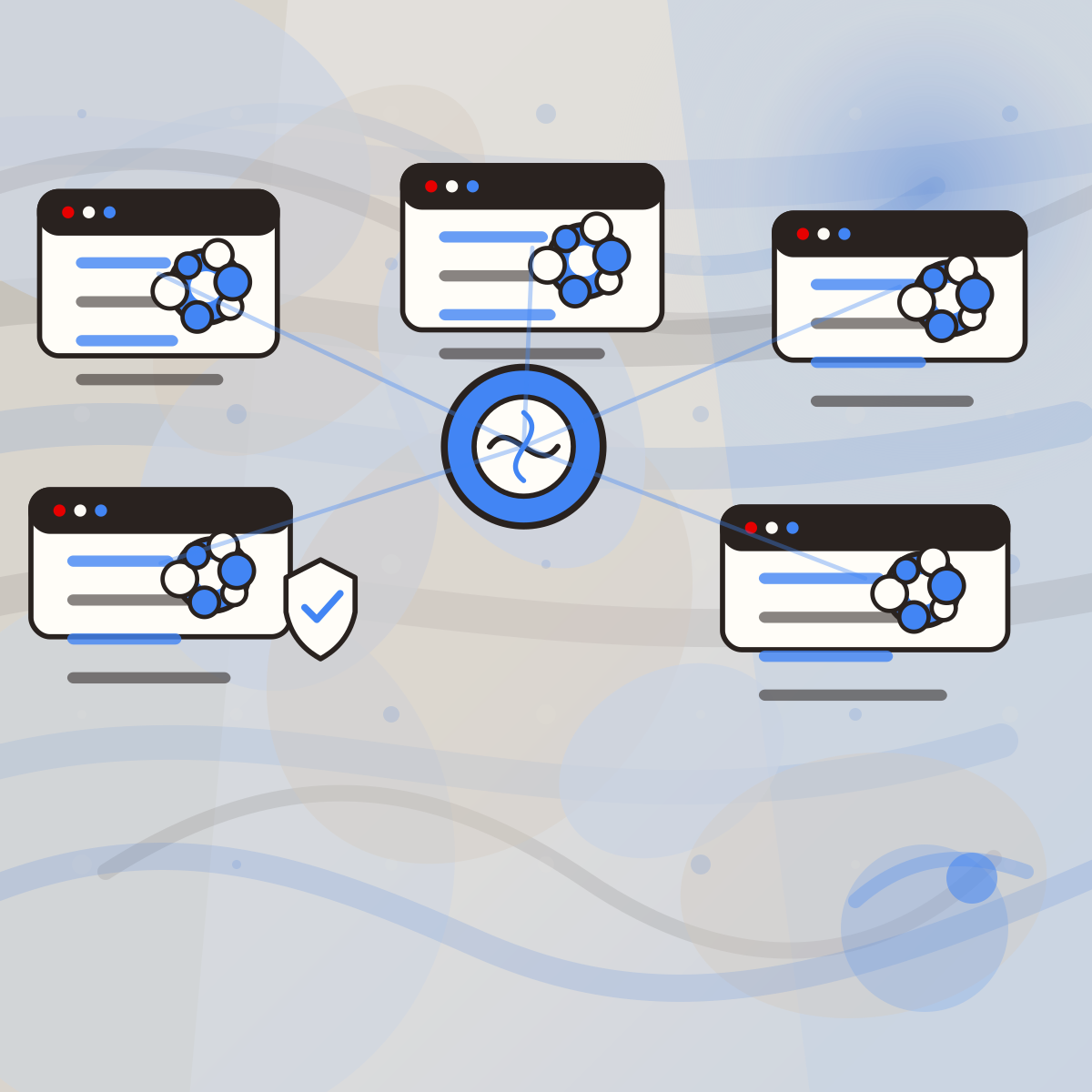
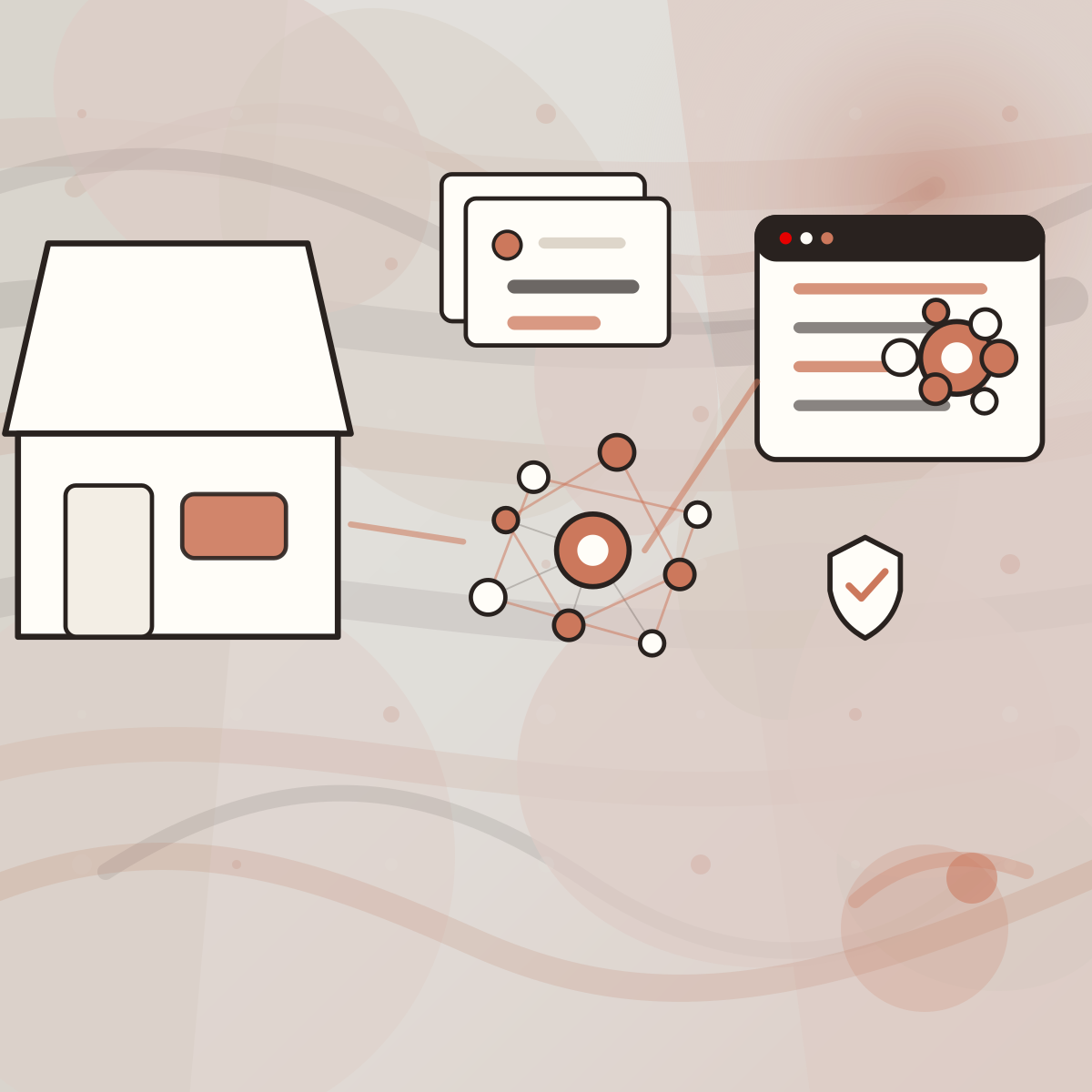
That makes the acquisition a direct bet on agent reliability. If agents are expected to do work inside external software, the quality of API specs, SDKs, documentation, and tool servers becomes part of the product. The model may reason through a task, but it still needs precise interfaces to retrieve data, call services, handle errors, and recover from failed actions.
Why Stainless matters
Stainless has been working on a broader idea it calls agent experience: the way APIs are discovered, understood, implemented, and operated by AI agents. In March 2026, Stainless argued that API teams should treat OpenAPI specs, typed SDKs, narrative documentation, MCP servers, agent skills, and AGENTS.md files as the new surface area for AI-assisted development.
The company also promoted an approach called SDK code mode for MCP servers. Instead of exposing every API endpoint as a separate tool, a server can expose documentation search and code execution, letting the agent write code against an idiomatic SDK in a sandbox. Stainless said its own evaluation against the Increase banking API reached 98% task completeness with this approach. That is a vendor claim, but it points to the same product question Anthropic is now trying to own: how do agents use complex APIs without flooding the context window or making brittle tool calls?
There is a customer impact too. Stainless said all hosted Stainless products, including its SDK generator, are winding down, and that new signups, projects, and SDKs are no longer available from May 18, 2026. Existing customers keep rights to SDKs they already generated, but the hosted service is moving away from being a neutral standalone product.
How this fits Anthropic’s MCP strategy
Anthropic introduced the Model Context Protocol in November 2024 as a standard way for AI systems to connect to tools and data. On December 9, 2025, Anthropic donated MCP to the Agentic AI Foundation under the Linux Foundation, saying the protocol should remain open, vendor-neutral, and community-driven.
By that December donation, Anthropic said MCP had more than 10,000 active public servers, adoption across products including ChatGPT, Cursor, Gemini, Microsoft Copilot, and Visual Studio Code, and official SDKs with more than 97 million monthly downloads across Python and TypeScript. That adoption makes MCP strategically important even outside Claude.
The Stainless acquisition does not reverse the Linux Foundation donation, but it does show Anthropic investing around the protocol’s production layer. Standards define how systems connect. Companies still compete on the tooling that makes those connections dependable.
What to watch next
For Anthropic, the upside is clear. Claude Platform can offer cleaner SDKs, better generated MCP servers, and more reliable connections between agents and enterprise systems. That matters for Claude Code, Claude Enterprise, and any customer trying to let agents operate real workflows rather than answer questions in isolation.
The risk is concentration. Stainless has served customers beyond Anthropic, and its public customer list has included companies such as OpenAI, Cloudflare, Replicate, and Weights & Biases. As hosted Stainless products wind down, API teams may need to decide whether to migrate to other SDK generation pipelines, self-host generated artifacts, or wait for Anthropic to expose new Claude Platform tooling.
The bigger market signal is that agent infrastructure is becoming strategic. Model providers are not only competing on intelligence. They are competing for the pipes, schemas, SDKs, docs, permissions, and tool runtimes that let agents safely act on real systems.
Sources
- Anthropic: Anthropic acquires Stainless
- Stainless: Stainless is joining Anthropic
- Anthropic: Donating MCP and establishing the Agentic AI Foundation
- Anthropic: Introducing the Model Context Protocol
- Stainless: Steps toward great agent experience every API provider can take today
- Stainless: SDK code mode for agents using APIs