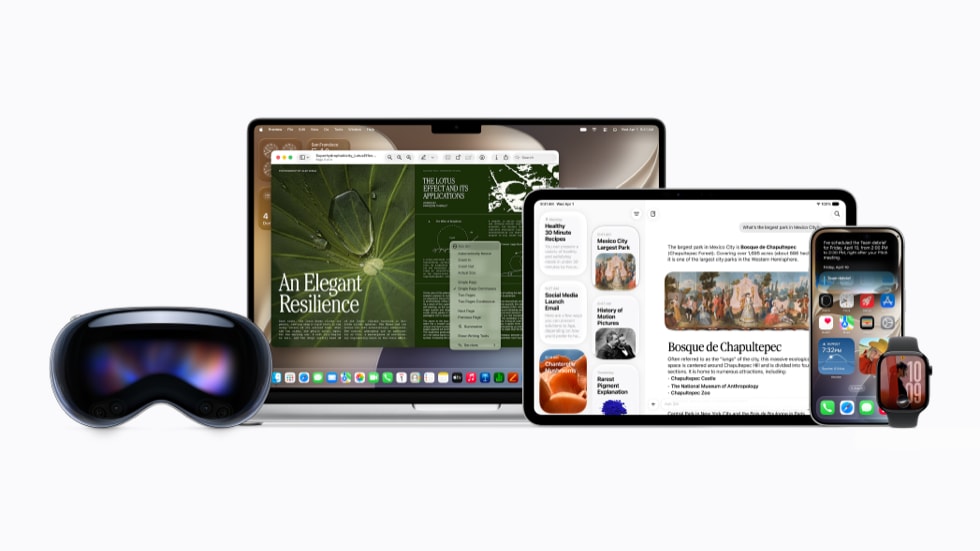
Apple introduced Siri AI on June 8, 2026 at WWDC26, positioning the rebuilt assistant as the front door for the next generation of Apple Intelligence. Apple says the new Siri can use personal context, onscreen awareness, broad world knowledge, and deeper app actions across iPhone, iPad, Mac, Apple Watch, and Apple Vision Pro.
The rollout is narrower than the headline. Developer testing starts now across iOS 27, iPadOS 27, macOS 27, and visionOS 27, with watchOS support coming in a future beta. A user beta is planned for later this year for supported devices set to English. Apple also says Siri AI will not initially be available on iPhone and iPad in the EU, and Siri AI plus other new Apple Intelligence features will not be available in China while regulatory work continues.
Siri becomes the operating-system interface
The important change is not the name. It is where Apple is putting Siri.
Apple says Siri AI can search across messages, emails, photos, and other personal context; answer questions about what is on screen; use broad world knowledge for up-to-date answers; and take actions across apps. The company also added a dedicated Siri app for revisiting conversations, privately synced through iCloud across Apple products.
That makes Siri AI less like a voice feature and more like an operating-system layer. If it works, the assistant becomes a way to move between apps, files, images, emails, and web information without manually opening each surface. If it fails, Apple will have spent another WWDC putting a heavy promise on top of the part of its software stack users already distrust most.
The device list matters
Apple’s support matrix is the practical limit. Siri AI and Apple Intelligence in the iOS 27-era platform releases are available on iPhone 16 models or later, iPhone 15 Pro and Pro Max, iPad mini with A17 Pro, iPad models with M1 or later, MacBook Neo with A18 Pro, Macs with M1 or later, Apple Vision Pro, and supported Apple Watch models when paired with an Apple Intelligence-enabled iPhone nearby.
There is also a higher tier for Apple’s most powerful on-device model. Apple says features such as expressive voices and more advanced dictation require iPhone Air, iPhone 17 Pro, iPhone 17 Pro Max, iPad with M4 or later and at least 12GB of unified memory, Mac with M3 or later and at least 12GB of unified memory, or Apple Vision Pro with M5.
That split will be easy for normal buyers to miss. Many devices can get Siri AI. Fewer get the strongest local model features. For Apple, that preserves a privacy-first on-device story while giving newer hardware a clearer upgrade pitch.
The privacy architecture is still the argument
Apple says Siri AI is built on next-generation Apple Foundation Models running on device and on servers through Private Cloud Compute. The company says personal data is not stored or made accessible to Apple when Private Cloud Compute handles requests, and that outside experts can verify that promise.
That is the core Apple differentiation. Google and OpenAI have broader cloud-first AI products. Apple is trying to turn local context into the advantage: the assistant can understand the user’s screen, files, messages, and photos because it is deeply integrated with the device and governed by Apple’s privacy model.
The constraint is capacity. Apple’s broader WWDC26 release says some Apple Intelligence features, including image generation, have daily usage limits because they rely on powerful server models, with increased access available through most iCloud+ subscription plans. That is a reminder that even Apple’s local-first story still depends on server economics for some of the features users will notice.
What to test before calling it a comeback
The test is not whether Siri AI can answer a polished demo prompt. The test is whether it handles messy context without surprising the user.
For builders, the first thing to watch is how third-party app actions and Spotlight integrations behave. Apple says personal context understanding can extend to third-party apps when developers integrate with Spotlight. That could make Siri useful inside real workflows, but it also raises the bar for permission design, error handling, and reversibility.
For users, the early questions are simpler. Does Siri AI know when to act and when to ask? Can it summarize personal context without exposing the wrong thing? Does it stay fast enough to become habit? And does the beta expand beyond English and the first supported regions quickly enough to feel like a platform shift rather than a staged demo?
For more on Apple’s AI position, see our Apple company profile and the AI model leaderboard.