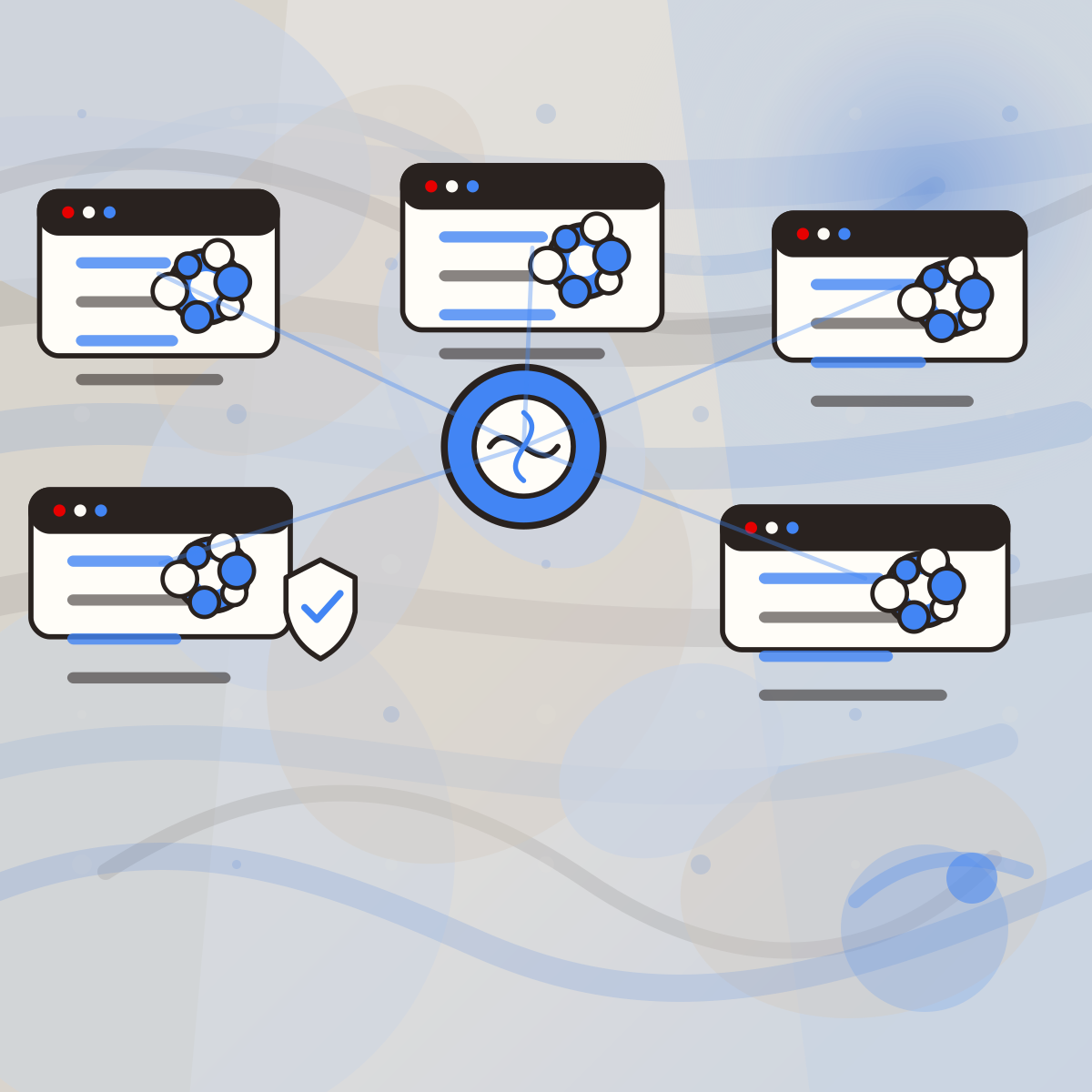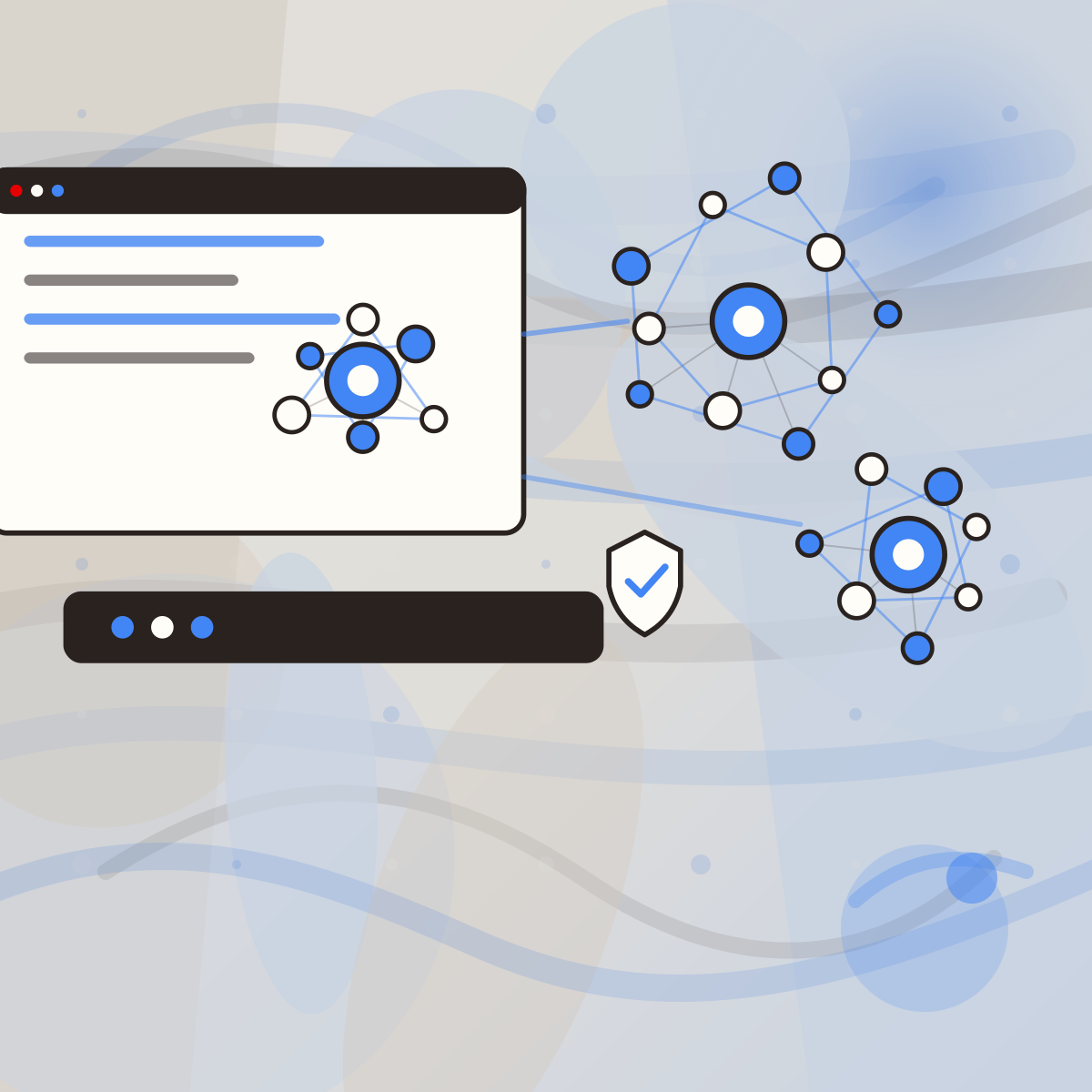
Editorial illustration of a developer workspace orchestrating multiple managed software agents
+ Google News

Google Antigravity 2.0 turns Gemini coding into a managed-agent platform

Google's I/O developer update adds Antigravity 2.0, Managed Agents in the Gemini API, native Android support in AI Studio, and a $2 million Build with Gemini hackathon.

Google’s I/O developer announcements on May 19, 2026 show a direct push into agentic software development. The company introduced Antigravity 2.0, Managed Agents in the Gemini API, native Android support in Google AI Studio, and new integrations between AI Studio, Android, Firebase, and Antigravity.

The engine is Gemini 3.5 Flash, which Google says outperforms Gemini 3.1 Pro across almost all benchmarks while running four times faster than other frontier models.

What changed

Antigravity 2.0 is a standalone desktop app for orchestrating multiple agents in parallel. Antigravity CLI gives terminal users a lighter surface. The SDK lets developers define custom agent behavior and host it on their own infrastructure.

Managed Agents in the Gemini API are the bigger platform move. Google says developers can create an agent with a single API call, give it tools and code execution in an isolated Linux environment, and resume that environment in later interactions.

Why this matters

The developer-agent race is moving from “a model can code” to “a platform can host, supervise, and resume agent work.” Persistent environments, custom instructions, skills, and tool access are the pieces that make agents useful across real projects.

Google also added native Android app generation and Play Console test-track publishing from AI Studio. That points toward prompt-to-app workflows becoming part of mainstream developer tooling.

What to watch next

Watch whether Managed Agents become reliable enough for CI-like workflows, not just demos. The winning platform will be the one developers trust to keep state, run code safely, and hand back reviewable changes.

Sources

The AI Feed Desk

The AI Feed Desk

Editorial desk

The AI Feed Desk tracks AI provider updates, model releases, agent tooling, and enterprise adoption, turning fast-moving announcements into source-linked context for builders and operators.

Noticed a typo, incorrect information, or translation error?

Tell us so we can fix it.

Help Improve This Article

Related Articles

Anthropic's Stainless acquisition brings Claude closer to the API layer

Anthropic's May 18 acquisition of Stainless gives Claude Platform deeper control over SDKs, CLIs, and MCP server tooling, showing how agent competition is moving into API connectivity.

The AI Feed Desk

By The AI Feed Desk

Google I/O 2026 makes Gemini the operating layer for agents

Google's May 19 I/O updates put Gemini 3.5 Flash, Gemini Spark, Android automation, and Universal Cart into one agent strategy across apps, devices, developer tools, and commerce.

The AI Feed Desk

By The AI Feed Desk

OpenAI says its model disproved an 80-year geometry conjecture

OpenAI's May 20 unit-distance proof gives AI research a concrete milestone: a model-generated result checked by mathematicians, with human verification still central.

The AI Feed Desk

By The AI Feed Desk

Claude for Small Business turns agent workflows into a toggle install

Anthropic's May 13 Claude for Small Business release packages 15 workflows and connectors for QuickBooks, PayPal, HubSpot, Canva, Docusign, Google Workspace, and Microsoft 365.

The AI Feed Desk

By The AI Feed Desk

KPMG is embedding Claude into Digital Gateway and 276,000 employee workflows

Anthropic's May 19 KPMG alliance puts Claude inside Digital Gateway, tax and legal tools, and a global workforce, showing enterprise AI moving into owned workflow software.

The AI Feed Desk

By The AI Feed Desk