Google Finance is coming out of beta with new portfolio features, scheduled market-intel briefings, and a dedicated Android app. Google published the update on June 25, and it surfaced through Google’s AI feed during today’s sweep.
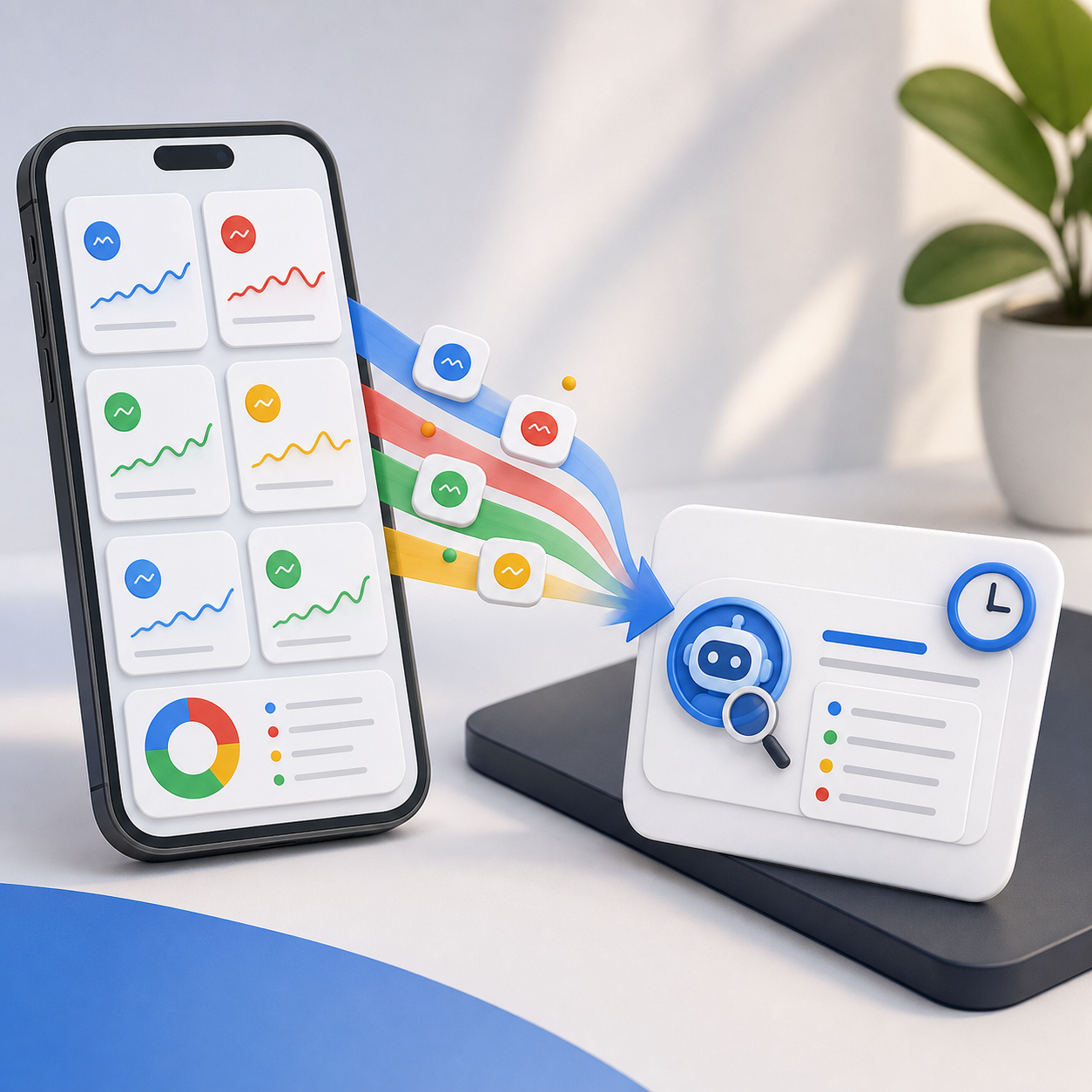
The story is not just that Google refreshed a finance product. The interesting part is how much of the workflow is becoming AI-shaped. Users can create portfolios from screenshots, uploaded files such as CSVs or PDFs, or natural-language descriptions of their holdings. They can then ask portfolio-aware research questions and schedule recurring briefings tied to a watchlist or portfolio.
That moves Google Finance from a place to check market data toward a consumer agent workflow: ingest my holdings, understand my context, monitor the market, and brief me on a schedule.
Portfolio setup is becoming less manual
Google says the new portfolio feature is rolling out globally in the new Google Finance. Existing Google Finance portfolios will be available automatically. New portfolios can be created by dropping in screenshots, uploading files, or describing investments.
That matters because portfolio tools often fail at the first step. Manual entry is tedious, broker connections can be messy, and users may have holdings spread across accounts. Letting someone start from a screenshot, a CSV, a PDF, or plain language lowers the activation barrier.
Once the portfolio exists, Google says users can ask research questions such as which sectors are underrepresented or how fixed income allocation affects long-term growth potential. The examples are framed as research and understanding, not trading instructions.
That distinction is important. AI can help summarize, classify, compare, and explain portfolio structure. It should not be treated as a source of personalized financial advice unless the product, regulation, and user protections are designed for that.
Scheduled briefings are the agentic part
The most agent-like feature is scheduled market intel. Google says users can describe a task, edit the schedule and instructions, and use a watchlist or portfolio to tailor the briefing. When the update is ready, notifications appear through the Google app on Android or iOS and in the Google Finance research panel on the web.
That is a recurring task loop. The user defines an information need once. Google Finance monitors sources in the background and delivers a briefing at the chosen cadence.
The product example is a daily pre-market briefing analyzing significant overnight moves across major cryptocurrencies. The broader use case is any market-monitoring routine where the user wants a short, contextual update rather than repeated manual searching.
This is where consumer AI is becoming more than a chat box. A chat box waits for a prompt. A scheduled briefing runs a standing instruction. It has context, timing, and delivery built in.
The Android app makes Finance more habitual
Google is also launching a dedicated Google Finance app for Android. The app includes watchlists, real-time data, a live financial news feed, the AI research tool, and AI-powered key moments that explain why a stock moved. Google says more capabilities from the web experience, including live earnings calls and the new portfolio and task features, will come to mobile over the coming months. An iOS app is planned later this year.
That mobile path matters because market checking is habitual. A web product can be useful for research, but a phone app with notifications changes the cadence. It makes Google Finance a daily surface rather than a destination users remember only when they search.
It also gives Google another place to connect Search, finance data, notifications, AI summaries, and user-specific context.
The caveat is trust
Finance is a sensitive category. A bad AI summary about a product launch is annoying. A bad AI summary about a portfolio can influence money decisions.
The safest way to read Google’s update is as a research and monitoring tool. It can consolidate holdings, explain allocation, summarize market movement, and keep users informed. It should not replace professional advice, risk planning, or a user’s own verification of financial information.
That caveat does not make the update minor. It shows how AI features are moving into recurring consumer workflows with real stakes. Google Finance is becoming less like a static market page and more like a portfolio-aware briefing system.
The next checkpoint is how clearly Google separates explanations from recommendations, how well the briefings cite or expose their underlying sources, and whether users can correct portfolio context when the AI gets an input wrong.