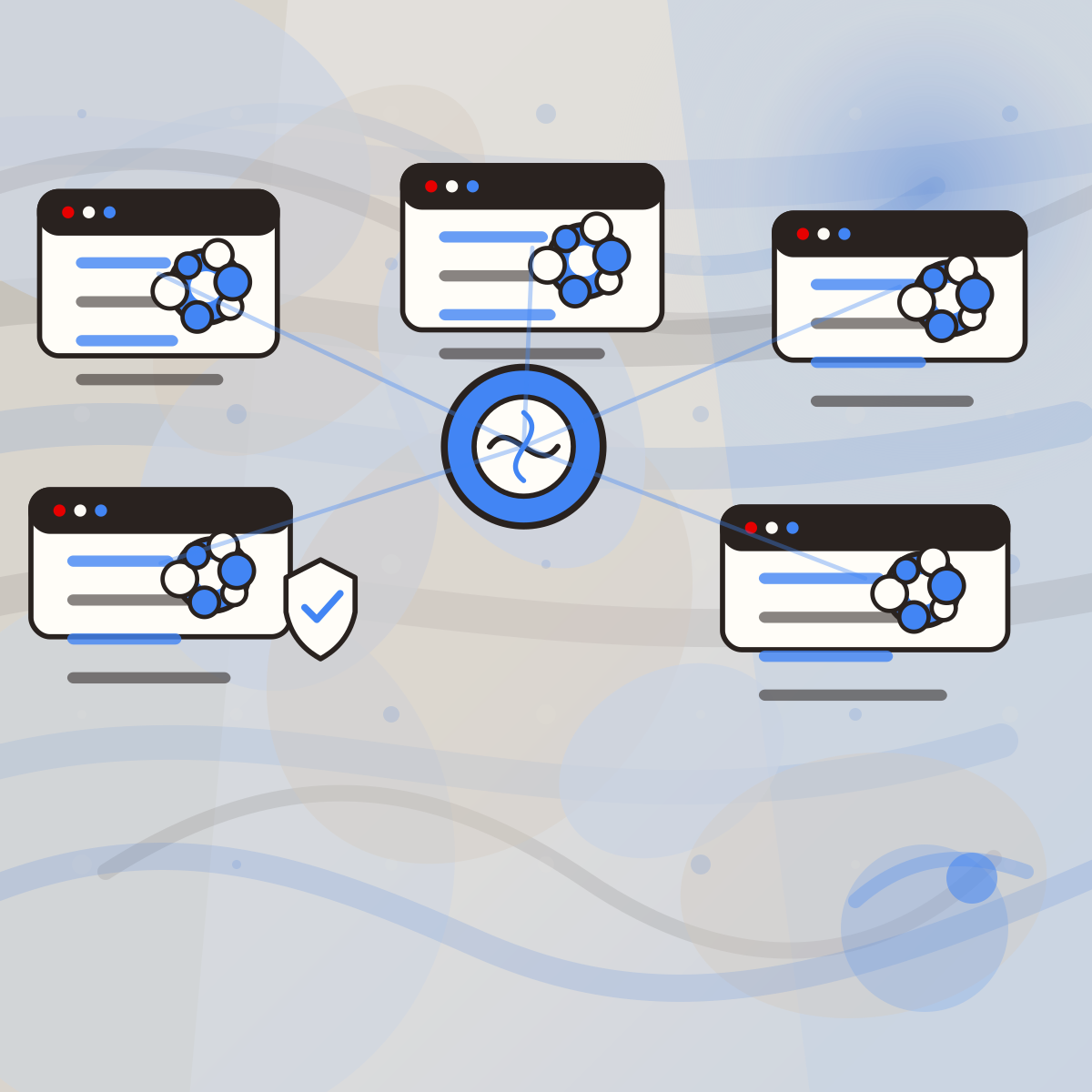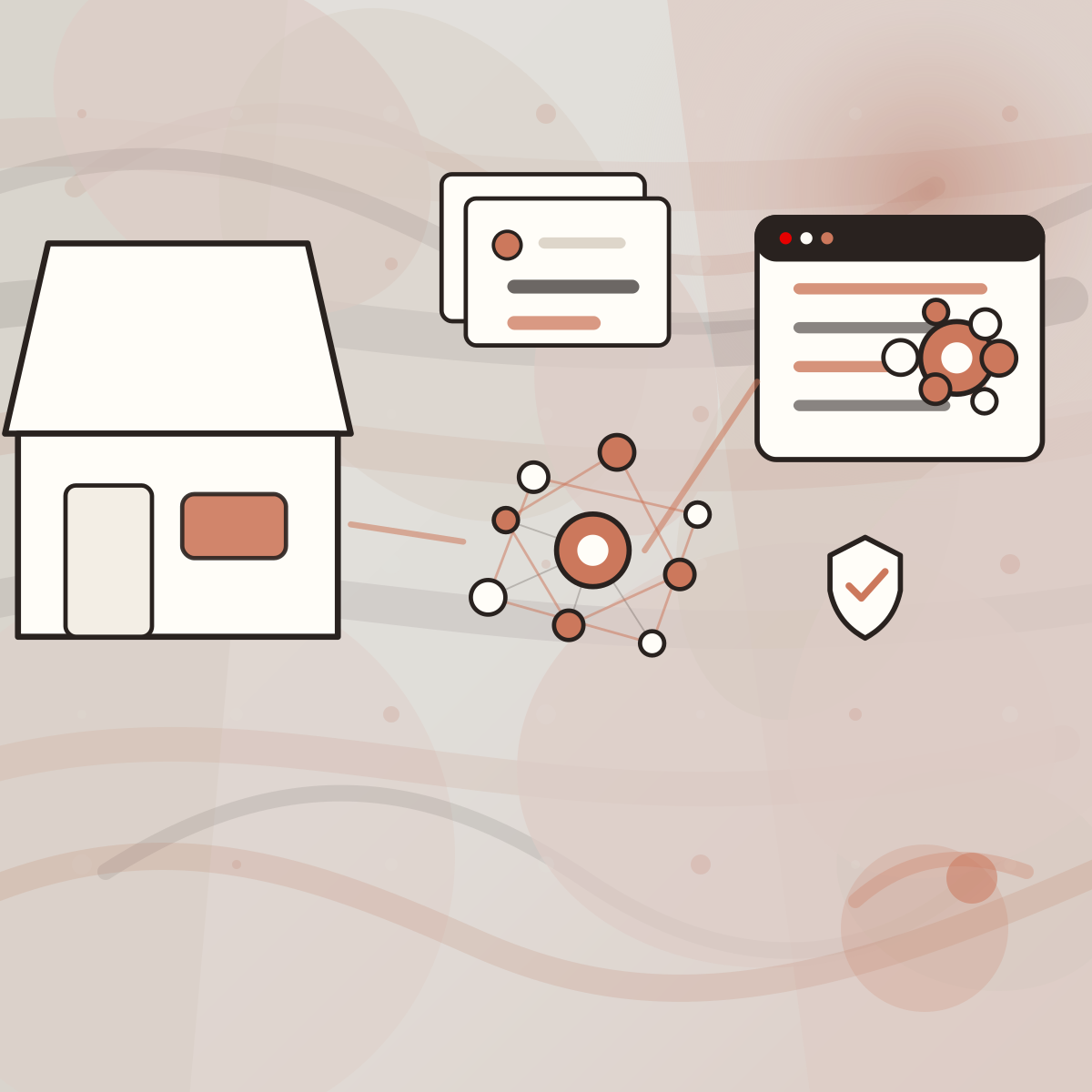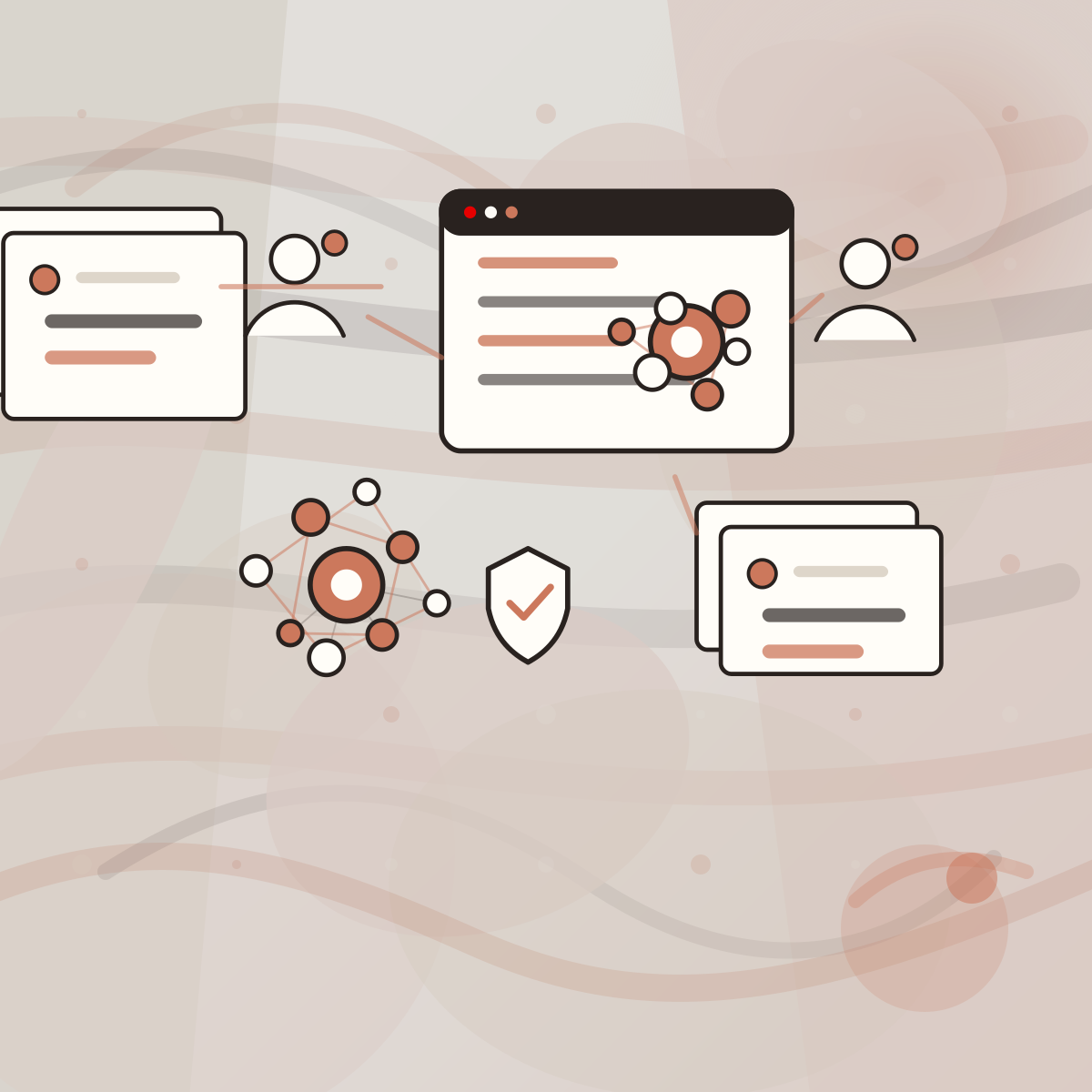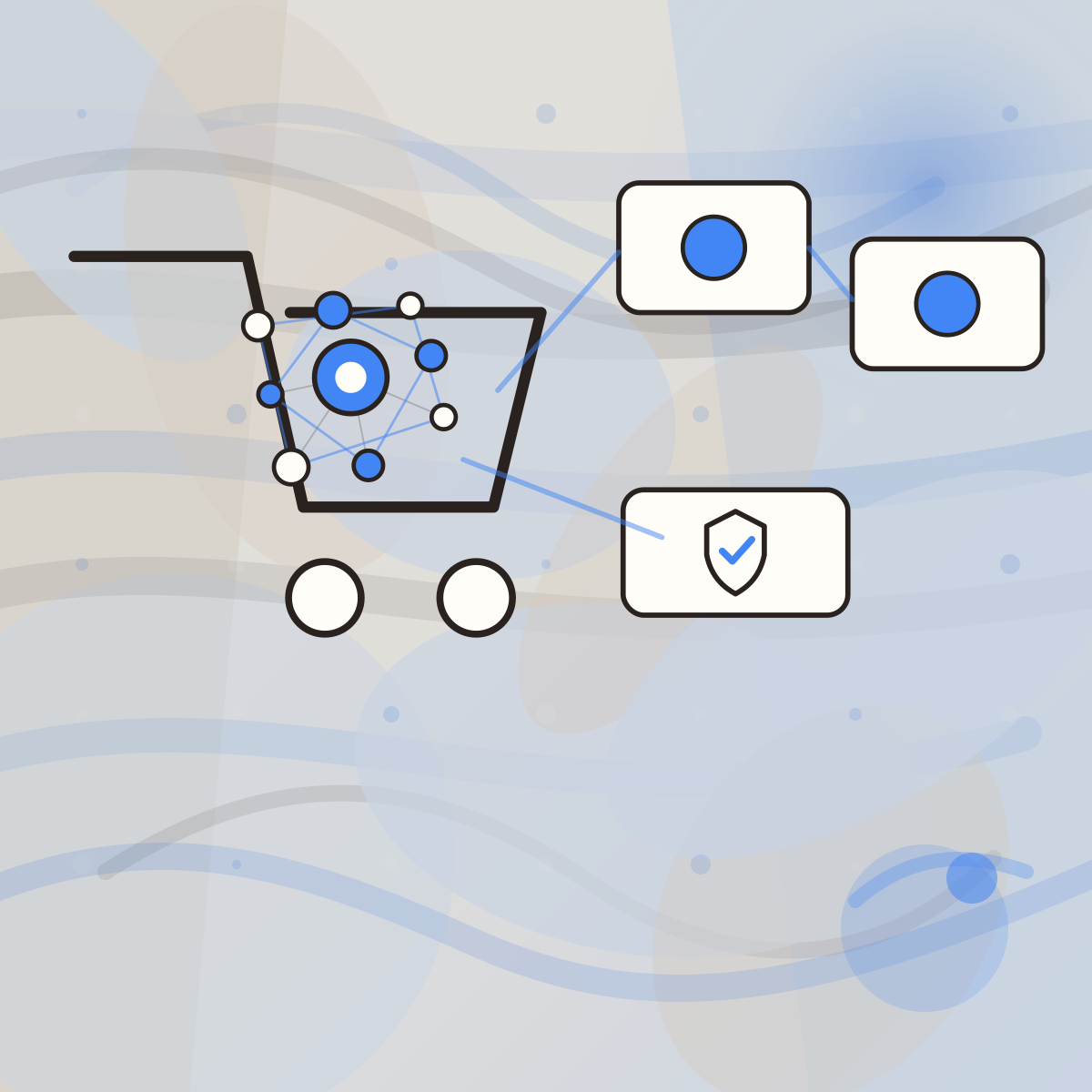
Editorial illustration of an agentic shopping cart connecting search, media, wallet, and checkout
+ Google News

Google's Universal Cart moves agentic shopping from search to checkout

Google's May 19 Universal Cart connects Search, Gemini, YouTube, Gmail, Wallet, and merchant checkout into a more proactive shopping agent surface.

Google introduced Universal Cart at I/O on May 19, 2026, and it may be the clearest example yet of agents moving from answers into transactions. The cart works across Google services and merchants, letting users add products from Search, Gemini, YouTube, or Gmail.

Once an item is in the cart, Google says the system can look for price drops, watch stock status, check price history, reason about product compatibility, and use Wallet context such as payment perks and loyalty information.

What changed

Universal Cart is rolling out across Search and the Gemini app in the U.S. this summer, with YouTube and Gmail to follow. Checkout can happen with Google Pay for participating merchants or through transfer to the merchant site, while the brand remains merchant of record.

Google also ties the cart to Universal Commerce Protocol and Agent Payments Protocol, including digital mandates meant to create a verifiable record of agentic payment decisions.

Why this matters

Shopping agents are only useful if they can cross the gap between recommendation and purchase without losing trust. That means product data, price history, payment rails, merchant accountability, and user control have to fit together.

Universal Cart gives Google a strong position because it already owns search intent, Gemini conversations, YouTube discovery, Gmail context, Wallet, and merchant relationships.

What to watch next

Watch user controls around price alerts, substitutions, and agentic checkout. The key trust question is whether the cart helps users buy intentionally or nudges them into more automated consumption.

Sources

The AI Feed Desk

The AI Feed Desk

Editorial desk

The AI Feed Desk tracks AI provider updates, model releases, agent tooling, and enterprise adoption, turning fast-moving announcements into source-linked context for builders and operators.

Noticed a typo, incorrect information, or translation error?

Tell us so we can fix it.

Help Improve This Article

Related Articles

Anthropic's Stainless acquisition brings Claude closer to the API layer

Anthropic's May 18 acquisition of Stainless gives Claude Platform deeper control over SDKs, CLIs, and MCP server tooling, showing how agent competition is moving into API connectivity.

The AI Feed Desk

By The AI Feed Desk

Google I/O 2026 makes Gemini the operating layer for agents

Google's May 19 I/O updates put Gemini 3.5 Flash, Gemini Spark, Android automation, and Universal Cart into one agent strategy across apps, devices, developer tools, and commerce.

The AI Feed Desk

By The AI Feed Desk

OpenAI says its model disproved an 80-year geometry conjecture

OpenAI's May 20 unit-distance proof gives AI research a concrete milestone: a model-generated result checked by mathematicians, with human verification still central.

The AI Feed Desk

By The AI Feed Desk

Claude for Small Business turns agent workflows into a toggle install

Anthropic's May 13 Claude for Small Business release packages 15 workflows and connectors for QuickBooks, PayPal, HubSpot, Canva, Docusign, Google Workspace, and Microsoft 365.

The AI Feed Desk

By The AI Feed Desk

KPMG is embedding Claude into Digital Gateway and 276,000 employee workflows

Anthropic's May 19 KPMG alliance puts Claude inside Digital Gateway, tax and legal tools, and a global workforce, showing enterprise AI moving into owned workflow software.

The AI Feed Desk

By The AI Feed Desk