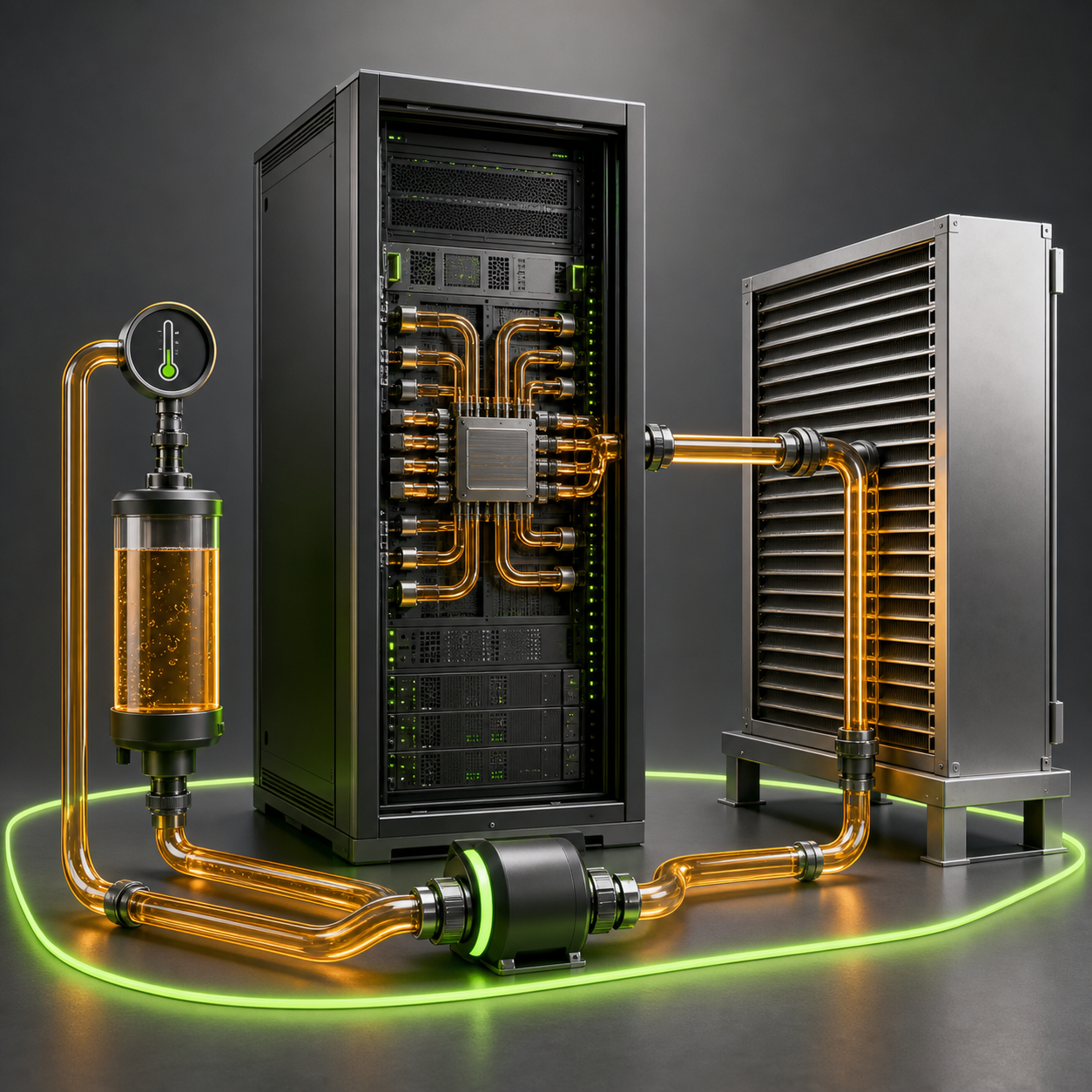
NVIDIA says its newest AI infrastructure can run cooling liquid at up to 45 C. That sounds counterintuitive until the data-center economics are clear: warmer coolant can make it easier to reject heat without chillers, especially in closed-loop dry-cooler designs.
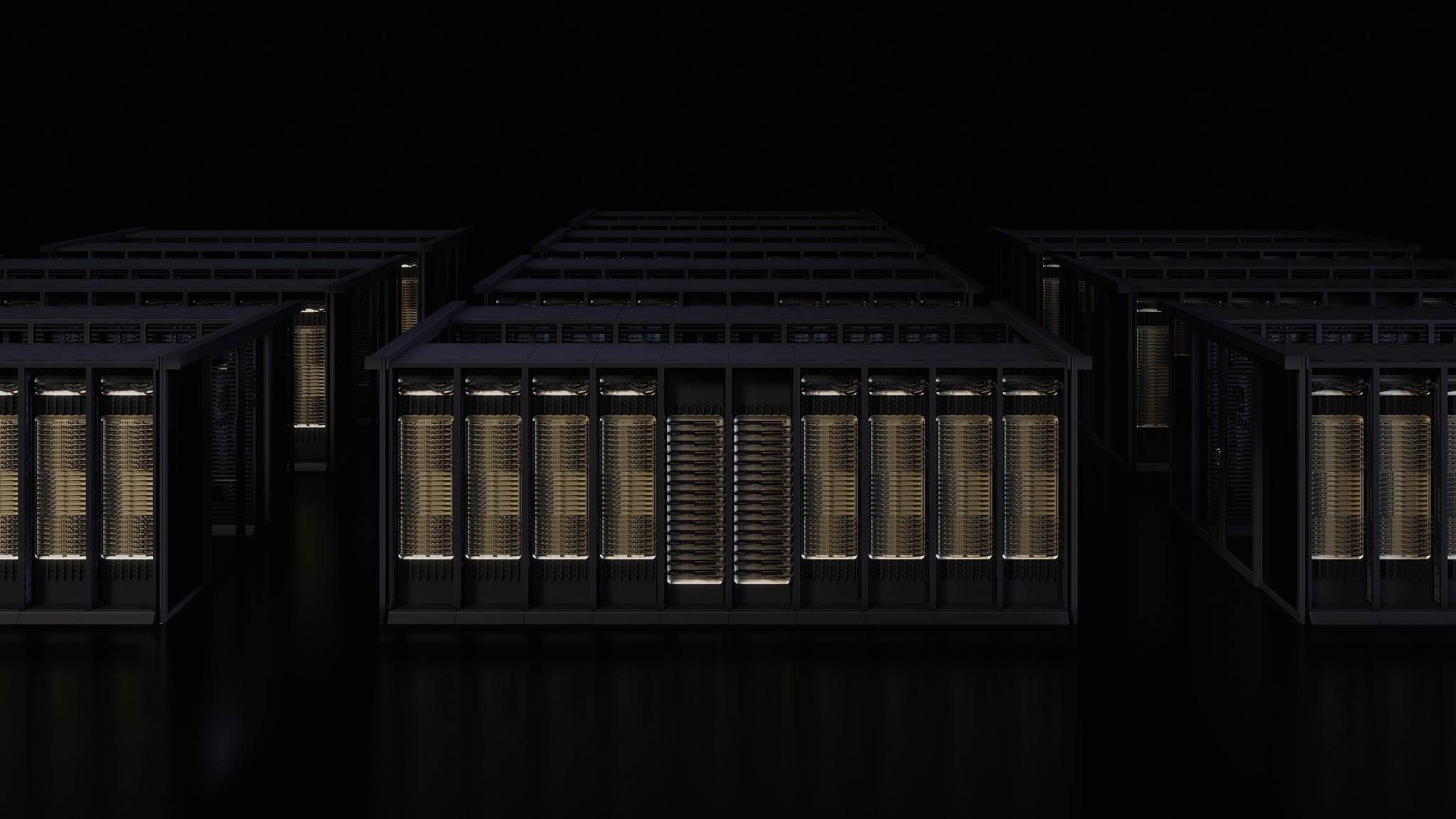
The company frames the Rubin generation of AI infrastructure as the first to achieve 100% liquid cooling, with every chip and networking component cooled by liquid and no fans in the system. NVIDIA ties the design to its DSX AI factory reference design, which it says uses a closed loop with zero water consumption in dry-cooler-based configurations.
This is an infrastructure story, not only a thermal-engineering detail. AI factories are becoming power, water, and grid projects. If the cooling loop can run warmer, the facility has more options for moving heat without spending as much energy on chilling water.
Heat is becoming part of the AI cost stack
NVIDIA’s post says cooling alone has historically accounted for up to 40% of a data center’s electricity consumption. It also cites an industry estimate that raising chiller plant temperatures by one degree can cut cooling energy costs by about 4%.
Those numbers should be read as NVIDIA’s sourced framing, not a guarantee for every site. Climate, facility design, workload, hardware density, and local power costs all matter. But the direction is real: as AI clusters grow denser, cooling choices become financial choices.
The 45 C point matters because it moves the cooling system closer to ambient-friendly operation. A facility that can reject heat through dry coolers for more of the year may use less chiller capacity and less evaporative water cooling. NVIDIA says a 50-megawatt hyperscale facility can save more than $4 million annually in cooling-related energy and water costs by moving to liquid cooling in the way its post describes.
Closed-loop cooling fits the water constraint
Water has become one of the harder public questions around data-center expansion. Communities may accept compute investment but push back on water demand, grid stress, or local infrastructure costs. A closed-loop design does not remove every environmental question, but it changes the cooling conversation.
NVIDIA says the DSX design has zero water consumption because it eliminates evaporative water cooling except for limited chiller use in some climates. That is a design claim, not proof that every AI factory using NVIDIA hardware will be water-free. The important point is that the reference architecture is now being sold around water and energy performance, not only around compute density.
That shift is visible across the AI infrastructure market. Chip performance still matters, but buyers and regulators increasingly ask what the cluster does to power availability, cooling load, construction timelines, and utility planning.
Rubin makes the system claim bigger
The post connects liquid cooling to the Rubin generation, which means NVIDIA is talking about the whole AI factory stack: accelerators, networking, rack design, cooling, and facility operations. The company wants the market to evaluate AI infrastructure as a system, not as a pile of GPUs.
That system framing has a business purpose. If cooling, networking, power, and deployment design become part of the differentiated product, NVIDIA can defend more of the infrastructure stack around the accelerator. It also gives cloud providers, sovereign AI projects, and enterprise buyers a clearer reference architecture for high-density deployments.
The caveat is that reference designs are not deployments. A real facility has local constraints: climate, permitting, grid interconnection, water policy, utility rates, and maintenance practices. The engineering may work, but the economics will vary by site.
The next evidence is operating data
The next checkpoint is measured deployment evidence. The most useful data would show power usage effectiveness, cooling energy, water consumption, maintenance cost, and uptime across real AI workloads and real climates.
NVIDIA’s June 22 post is still important because it shows where the AI factory argument is heading. The next generation of infrastructure is not just about faster chips. It is about whether dense AI systems can be cooled, powered, permitted, and operated at a scale that makes the model business work.