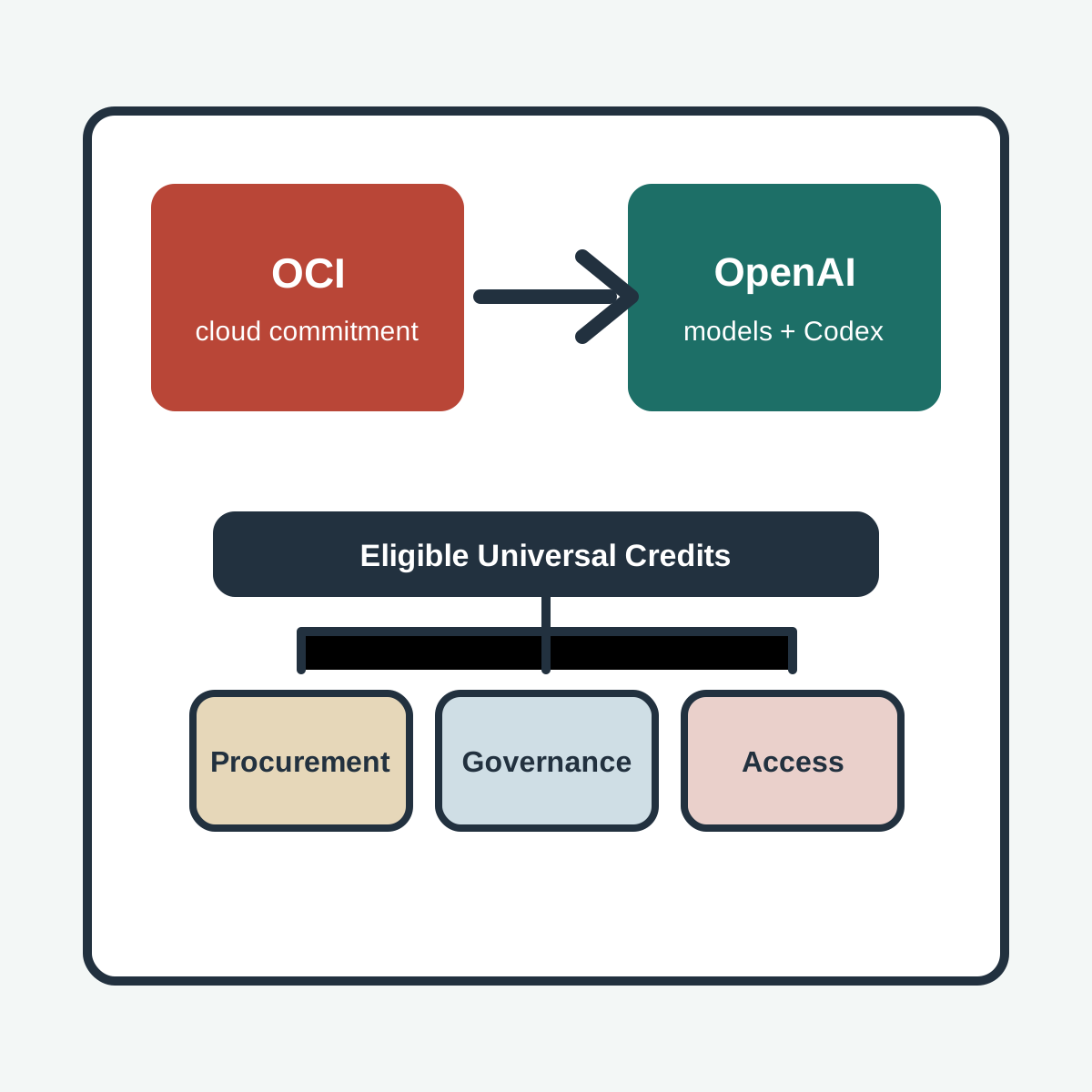
OpenAI says Oracle Cloud Infrastructure customers will be able to use eligible Oracle Universal Credits to access OpenAI frontier models and Codex. The company published the announcement on June 10, 2026, and says availability will begin in the coming weeks.
The news is less about a new model than a new buying path. Enterprise AI adoption often slows down at procurement, security review, and cloud-budget boundaries. OpenAI is trying to meet customers inside a spending commitment they already have, instead of asking them to create a separate purchasing route.
The product is the purchasing path
OpenAI’s post says the partnership is meant for enterprises that want to deploy AI through procurement processes and governance frameworks they already trust. That is the core story. The company is not announcing a new benchmark, a lower model price, or a new Codex capability.
Instead, the change is operational. OCI customers with eligible Universal Credits will have a path to use those credits toward OpenAI models and Codex. For a large organization, that can matter as much as model quality. A team may already have budget, vendor approval, billing controls, and compliance reviews tied to Oracle. Moving OpenAI access into that lane reduces the number of new internal approvals needed before a pilot can become production work.
That is especially relevant for Codex. Coding agents touch source code, build systems, test logs, and sometimes deployment workflows. Enterprises do not evaluate them only as chat tools. They evaluate identity, auditability, data boundaries, procurement ownership, and who is allowed to approve autonomous changes.
Codex is part of the enterprise bundle
OpenAI names Codex alongside its frontier models. That placement is important because it frames Codex as a production enterprise tool, not only a developer assistant for individual subscribers.
The post says teams can use OpenAI models to build AI applications, analyze complex information, automate workflows, and create customer and employee experiences. Codex fits the same enterprise pattern: it helps teams make changes to software systems where governance and review paths are already sensitive.
The cloud channel is becoming a distribution layer
The Oracle announcement follows a broader pattern in AI distribution. Labs do not only sell through their own apps and APIs. They also push models into the places enterprises already buy cloud, data, productivity, and developer tooling.
That channel strategy has a practical reason. The harder AI budgets get, the more teams will prefer spending paths that already exist. Cloud commitments are often negotiated ahead of time and tied to annual planning. If AI access can consume those commitments, the model provider gets closer to budget that has already cleared procurement.
There is also a control benefit for customers. Buying through a cloud channel can make it easier to centralize usage, vendor management, and cost reviews. It does not remove the need to test model behavior, data handling, or Codex workflow safety, but it can make the first internal approval easier to frame.
What teams should check
The first question is eligibility. OpenAI’s announcement says eligible Oracle Universal Credits can be applied; it does not say every OCI customer or every contract qualifies. Teams should confirm which credits, regions, accounts, and OpenAI products are included before planning a migration.
The second question is governance. If Codex becomes available through the same enterprise purchasing path as models, engineering leaders still need policies for repository access, approval requirements, test execution, and logging. A clean purchasing path does not substitute for a safe operating model.
The third question is economics. If a team already has unused cloud commitments, the partnership may make OpenAI access easier to justify. If it does not, the comparison remains the same as any AI platform decision: model quality, latency, tooling, support, and total cost for the workflow.
For live model comparisons, see The AI Feed models page. For related company coverage, see OpenAI.