xAI launched the Grok Build Plugin Marketplace on June 11, 2026. The marketplace is built into Grok Build, so users can browse, install, and update plugins from inside the terminal.
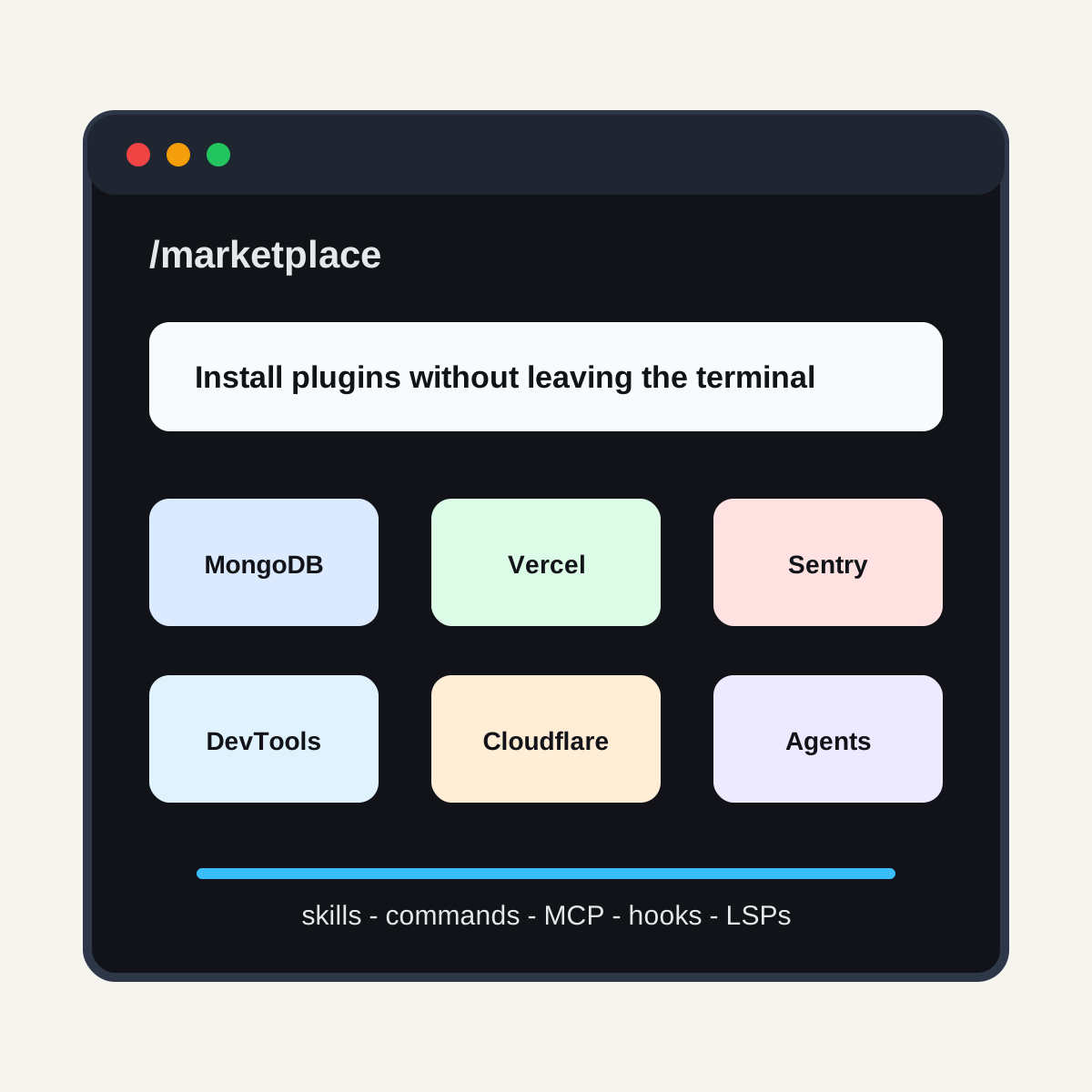
The important part is the bundle format. xAI says a plugin can package skills, slash commands, agents, hooks, MCP servers, and language servers into one installable unit. That turns Grok Build from a coding agent into a distribution surface for the tools around the agent.
Plugins make the agent environment extensible
The launch catalog covers a practical developer stack. MongoDB is for data exploration and query work. Vercel is for deployments and domains. Sentry is for production debugging. Chrome DevTools is for live browser control and performance tracing. Cloudflare is for Workers and Durable Objects. Superpowers is for agent-driven workflows.
That spread matters because coding agents rarely fail only on code generation. They need environment access: databases, deployment systems, error traces, browsers, cloud platforms, and project-specific routines. xAI is making those integrations installable rather than asking every user to wire them by hand.
The install path is also familiar. xAI says users can type /marketplace in Grok Build and press i to install a plugin, or use CLI commands to list and install from the marketplace.
		grok plugin marketplace list
grok plugin install <name> --trust
The security model is about pinning, not magic
xAI says every remote plugin in the catalog is pinned to a specific commit SHA and that Grok Build verifies the pin at install time. The public GitHub repository gives more detail: remote sources must pin a full 40-character lowercase commit SHA, and the repo says missing pins should fail rather than silently shipping changed code.
That is a real safety property. It reduces the risk that a plugin update or upstream compromise quietly changes what gets installed.
It is not a complete security guarantee. Plugins may execute code and access local data or connected services. The marketplace repository warns that third-party plugins are provided by their respective authors and that users install them at their own risk.
The catalog is open, but structured
The marketplace repository describes .grok-plugin/marketplace.json as the catalog index and source of truth. First-party plugins live under plugins/; third-party plugins live under external_plugins/ or point to pinned remote repositories.
That structure makes the marketplace legible. A plugin entry can carry a name, description, category, homepage, keywords, domains, version, author, tags, and source information. The generated plugin index records what each plugin provides so clients can show its contents before installation.
For developers, the open-catalog model creates a path to distribution: build a plugin, add it to the catalog, regenerate the index, validate it, and open a pull request. For xAI, it creates a way to expand Grok Build without treating every integration as a first-party product project.
What to watch next
The next useful signal is adoption, not catalog size. A marketplace can launch with impressive names and still be thin if the plugins do not save real work.
The practical tests are straightforward: whether the Vercel plugin can resolve failed deployments faster, whether Sentry can turn a stack trace into a reproducible fix, whether Chrome DevTools can capture traces reliably, and whether teams can audit what each plugin did after the fact.
The broader move is clear. xAI is making Grok Build more like a programmable agent workstation. The model matters, but the installed capabilities around the model may decide whether developers keep it open all day.
For live model comparisons, see The AI Feed models page. For related company coverage, see xAI.