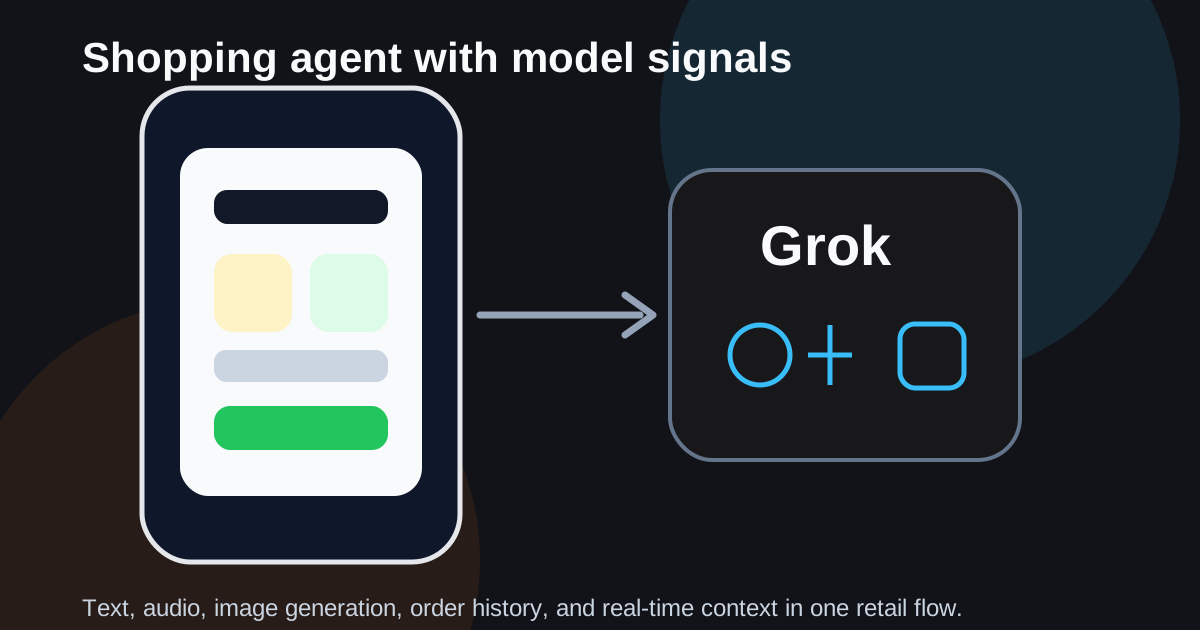
xAI says Gopuff has launched Go, an AI shopping agent in the Gopuff app powered by Grok text, audio, and image models.
The pitch is straightforward: Go builds personalized shopping carts, uses past preferences and external signals, and generates a visual shopping feed from Gopuff inventory using Grok Imagine. xAI says Go is available now in the Gopuff app on iOS and Android, starting in the US, with the UK to follow.
The agent is closer to checkout than chat
Grok’s consumer story has mostly been a standalone assistant story: chat, voice, image generation, and developer APIs. Go is different because the model sits inside a transaction path. The user is not only asking a general assistant what to buy. The agent can assemble a cart in a delivery app where the next action is an order.
That makes the quality bar different. A shopping agent needs to understand preferences, timing, stock, substitutions, and price sensitivity. It also needs to avoid becoming annoying. The useful version anticipates a repeated purchase or a weather-driven need. The bad version over-personalizes and fills a cart the user did not ask for.
xAI’s post gives one concrete data base: Gopuff’s 13 years of demand intelligence from hundreds of millions of orders. That does not prove Go will work well, but it explains why the model is not the whole product. Retail agents need domain data and fulfillment context as much as language reasoning.
Multimodal is part of the retail loop
xAI says Go pairs Grok reasoning, voice, and image generation with Gopuff’s order history and real-time signals from X and the web. The visual piece is especially notable: Go includes a shopping feed based on Grok Imagine that generates scenes from Gopuff inventory.
That is not just decoration if it helps users evaluate bundles or occasions. A snack run, a game-night order, a pantry restock, and a last-minute cold-medicine basket all have visual and contextual cues. The risk is that generated scenes can make ordinary items feel more tailored than they are. For a shopping product, the line between helpful presentation and persuasion is worth watching.
Availability is narrow but real
The launch is not a future demo. xAI says Go is available now in the Gopuff app on iOS and Android in the US, with the UK planned next. That gives the product a live consumer testing surface rather than a lab-only announcement.
The first thing to test is whether Go saves time on repeat purchases. A shopping agent has to earn permission quickly. If it can reorder likely essentials, build sensible carts, and handle voice or image-driven requests without adding friction, it has a reason to exist. If it merely turns shopping into a chat interface, users will go back to search and saved lists.
For xAI, the strategic point is distribution. Grok does not have to win only as a destination app. It can show up in partner workflows where the model has a clear job and a measurable outcome.
What to watch next
The next useful evidence would be operational: how often users accept Go-built carts, how well it handles substitutions, whether the visual feed changes purchase behavior, and how Gopuff explains data use around preferences and external signals.
Until then, the narrow read is the safest one. xAI has put Grok into a real commerce agent with text, audio, image generation, order history, and external context. Whether that becomes a durable shopping workflow depends on trust, speed, and whether the agent knows when to stop helping.
For live model comparisons, see The AI Feed models page. For related company coverage, see xAI.